

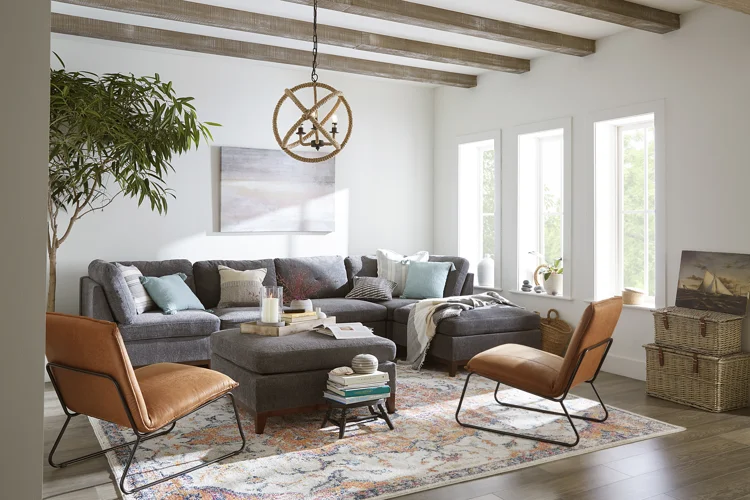
Creating a beautiful home no longer requires compromising the health of the planet. Modern interior design is experiencing a profound shift away from disposable consumerism toward mindful living. For decades, fast furniture dominated retail showrooms, relying on fragile composite boards, petroleum-based cushions, and synthetic chemical binders that off-gas toxic substances into indoor living areas. Today, conscious homeowners prioritize longevity, non-toxic manufacturing, and renewable resources.
Sourcing eco-friendly furnishings transforms living environments into healthier, enduring sanctuaries. Understanding which materials provide structural integrity, tactile beauty, and minimal ecological impact allows you to make informed decisions that benefit both your residence and the global environment.
How to Measure Your Home Correctly Before Ordering Bulky Furniture
Even the most sustainably crafted wardrobe, sectional, or dining table becomes an environmental and financial burden if it cannot fit inside your home. Inaccurate spatial planning leads to carbon-intensive delivery rejections, vehicle return trips, and potential structural damage during transit. Taking precise measurements ensures your furniture integrates seamlessly into your living space.
Mapping the Final Room Destination
Proper room preparation goes beyond laying a single tape measure across the floor. Furniture pieces occupy volumetric three-dimensional space, which alters visual sightlines, traffic flow, and wall mechanics.
-
Determine Wall-to-Wall Boundaries: Measure the intended wall surface across three separate points: near the floor baseboards, across the mid-wall torso height, and near the upper boundary. Walls often bow or tilt, and the smallest measurement represents your actual usable limit.
-
Account for Architectural Protrusions: Subtract clearance for baseboard trim, decorative crown molding, HVAC air returns, floor vents, radiator panels, light switches, and wall outlets. A credenza that touches an outlet might leave unsightly power cables pinched or require hazardous clearance.
-
Map Functional Clearance Zones: Calculate walking pathways around the item. Standard interior passages require a minimum clearance of thirty-six inches. For dining sets, allocate forty-two inches from the edge of the table to the closest wall to allow chairs to pull out comfortably. For dressers or wardrobes, verify that hinged cabinet doors and sliding drawers can open fully without colliding with door frames, window sills, or bed frames.
-
Perform a Ground Mockup: Outline the exact width and depth of the piece onto your flooring using painter tape or flat cardboard sheets. Walking around the outline gives an accurate tactile sense of physical scale, preventing room overcrowding.
Surveying the Transit and Entry Route
The journey from the delivery truck to the final room presents the greatest risk of structural pinching, surface scuffing, or failed drop-offs.
-
Measure Exterior and Interior Doorways: Record the height and width of every doorway along the entry path. Deduct the thickness of the open door leaf itself if the door cannot open flat against the adjoining wall. Take note of protruding doorknobs and deadbolts.
-
Assess Hallway Turning Radii: Long sofas and armoires require significant pivoting space. Measure hallway widths along with the clearance space opposite entry doors to confirm that long pieces can pivot into adjoining rooms.
-
Check Vertical Stairwell Clearances: In multi-level homes or apartment buildings, calculate the narrowest width of the staircase, the handrail height, and the vertical clearance between the intermediate stair treads and low-hanging ceiling bulkheads. Measure the surface area of stair landings to confirm that tall items can stand upright while turning.
-
Verify Elevator Dimensions: When applicable, measure elevator door openings, internal cabin ceiling height, overall depth, and diagonal clearance from the bottom threshold to the upper opposite corner. Verify weight restrictions with building management before scheduling bulky deliveries.
Essential Sustainable Materials for Conscious Interiors
Selecting eco-friendly furniture requires looking past surface-level marketing to understand the origin, processing methods, and lifecycle qualities of each foundational component.
Reclaimed and Salvaged Timber
Reclaimed wood is one of the most character-rich materials available for home furnishings. Salvaged from decommissioned barns, heritage factories, rail trestles, and old shipping pallets, this wood prevents fresh deforestation while preserving architectural history.
-
Exceptional Density: Historic timber was often harvested from old-growth trees, providing a tighter annual ring structure and greater cellular density than modern plantation timber.
-
Climatic Stability: Having endured decades of shifting seasonal humidity, salvaged wood has naturally finished its expansion and contraction cycles. It demonstrates remarkable dimensional stability and resists warping, cupping, or splitting.
-
Minimal Processing Energy: Repurposing antique timber eliminates the energy-heavy harvesting and kiln-drying operations required by green, freshly felled lumber.
Rapidly Renewable Bamboo
Often mistaken for hardwood, bamboo is an exceptionally fast-growing perennial grass capable of reaching full structural maturity in three to five years. Its rapid vegetative replenishment makes it a premier alternative to slow-maturing timber species.
-
Remarkable Tensile Strength: Bamboo fibers exhibit a tensile strength comparable to mild structural steel, delivering robust load-bearing performance for chairs, desks, and shelving units.
-
Self-Regenerating Root Networks: When bamboo is harvested, the root base remains undisturbed in the soil. This prevents soil erosion and eliminates the need for tilling, replanting, or chemical fertilizers.
-
Substrate Considerations: Ensure that laminated bamboo panels use formaldehyde-free, low-emission adhesives. Moso bamboo represents the industry standard for high-performance architectural casework.
Natural Bark Cork
Harvested exclusively from the outer bark layer of the cork oak tree, cork provides a resilient, modern aesthetic with outstanding environmental credentials. The tree continues to flourish undisturbed after stripping, regenerating its protective bark every nine to twelve years.
-
Carbon Sequestration: A harvested cork oak absorbs up to five times more carbon dioxide during its active bark regeneration cycle than an unharvested tree.
-
Natural Antimicrobial Resistance: Cork contains natural suberin, a waxy substance that repels dust mites, resists fungal rot, and impedes moisture penetration, making it an excellent choice for allergy-sensitive households.
-
Acoustic and Thermal Insulation: The microscopic honeycomb structure of cork traps air pockets, naturally dampening interior room echoes and providing a soft, warm surface for side tables, stool seats, and wall panels.
Recycled and Infinitely Circular Metals
Metals like aluminum, stainless steel, and iron can undergo continuous remelting and re-forming cycles without losing their inherent structural integrity or tensile capabilities.
-
Reduced Processing Energy: Producing recycled aluminum uses roughly five percent of the initial energy required to extract and refine virgin bauxite ore.
-
Industrial Durability: Metal furniture frames resist structural shearing, pet scratches, and moisture expansion, offering multi-generational utility in both indoor and patio settings.
-
End-of-Life Circularity: When a steel or aluminum table reaches the end of its useful lifespan, the material can be recycled indefinitely, bypassing municipal landfills entirely.
Secondary Hardwoods: Mango and Rubberwood
Utilizing agricultural timber byproducts provides a steady supply of dense hardwood while generating secondary revenue streams for farming communities.
-
Rubberwood (Parawood): Grown on natural latex plantations, rubber trees cease producing harvestable sap around thirty years of age. Previously burned as agricultural waste, this plantation timber is now kiln-dried into smooth, stable hardwood suitable for dining frames and sideboards.
-
Mango Wood: Sourced from mature fruit trees that have finished their productive fruit-bearing lifecycle, mango wood possesses a rich golden-brown hue and prominent grain figures. Its dense cell structure performs identically to traditional commercial hardwoods like birch or oak.
Organic and Natural Upholstery Textiles
The outer fabrics and inner fillings of sofas, armchairs, and cushions represent a major source of microplastics and indoor chemical off-gassing. Eco-conscious homes utilize pure plant and animal fibers.
-
Organic Linen and Hemp: Grown with minimal water and zero synthetic pesticides, flax linen and industrial hemp yield fibers that are naturally breathable, hypoallergenic, and resistant to mechanical abrasion. Both textiles soften with use and biodegrade naturally at the end of their functional cycle.
-
GOTS-Certified Organic Cotton: Free from toxic synthetic fertilizers, chemical defoliants, and halogenated dyes, organic cotton protects both agricultural topsoil and indoor living spaces from hazardous residues.
-
Natural Latex Cushioning: Derived from the sap of the rubber tree using mechanical foaming techniques, natural latex provides an elastic, pressure-relieving alternative to conventional petroleum-derived polyurethane foams.
Non-Toxic Finishes and Low-Impact Binders
A piece made from sustainable wood loses its environmental integrity if it is coated in volatile organic compounds (VOCs) or synthetic binders. Industrial varnishes, thinners, and formaldehyde glues off-gas into indoor air for years, aggravating respiratory pathways and causing headaches.
Conscious furniture makers utilize solvent-free plant oils such as linseed, tung oil, and carnauba wax, alongside zero-VOC water-based acrylic lacquers. These finishes nourish the material, enhance natural wood grain depth, and maintain safe indoor air quality. When selecting wooden furniture, verify that the substrate uses adhesives with no added formaldehyde to protect your living space.
Frequently Asked Questions
Can furniture constructed from bamboo withstand heavy daily kitchen or office use without denting?
Bamboo exhibits exceptional surface hardness and compressive strength, often testing harder on the Janka hardness scale than standard red oak or American walnut. However, strand-woven bamboo provides significantly greater dent resistance than traditional horizontal or vertical cut bamboo planks, making strand-woven options preferable for active tabletops or desk surfaces.
How does reclaimed wood react to fluctuating indoor temperature and heating during winter months?
Because reclaimed timber has undergone decades of seasonal environmental acclimation, it maintains greater structural stability than freshly harvested green lumber. It will not warp or cup excessively under domestic heat, although homeowners should still avoid placing pieces directly over active forced-air floor registers.
What is the environmental drawback of using recycled plastic outdoor furniture?
While recycled high-density polyethylene stops single-use plastic jugs from entering municipal landfills and provides complete moisture immunity outdoors, it remains a synthetic material. Over prolonged exposure to ultraviolet sunlight and mechanical friction, plastic furniture can shed microscopic plastic particles into surrounding garden soil, and low-grade polymers can become brittle over time.
Are naturally oiled wood furniture finishes waterproof against regular drink spills?
Natural oil finishes penetrate deep into wood fibers rather than forming an impenetrable plastic film on top like polyurethane does. While they repel casual liquid splashes, sitting moisture or standing liquid rings will eventually penetrate the porous surface if left unaddressed for several hours. Periodic reapplication of natural paste wax preserves moisture resistance.
Why is natural latex superior to memory foam for sustainable upholstery cushions?
Memory foam is a petroleum-derived polyurethane product that utilizes petrochemical polyols and synthetic foaming catalysts, which release VOC gases and degrade into crumbly micro-particles within eight to ten years. Natural latex is a renewable plant fluid harvested from living trees that maintains its elastic spring-back resilience for twenty years or more without chemical off-gassing.
How do you verify whether timber has been legally and sustainably harvested?
Look for third-party chain-of-custody documentation from recognized forestry management programs, particularly the Forest Stewardship Council. Certifications confirm that the timber was logged without clear-cutting natural habitats, infringing on indigenous community lands, or employing harmful harvest operations.
Does cork furniture require specialized conditioning to prevent it from drying and crumbling over time?
Modern cork furniture components are compressed using natural heat and biocompatible binders, forming stable, dense monolithic blocks that do not crumble under standard domestic climate conditions. Dusting with a damp cloth and avoiding harsh chemical degreasers is typically all that is needed to preserve its structural flexibility.
Comments are closed.