

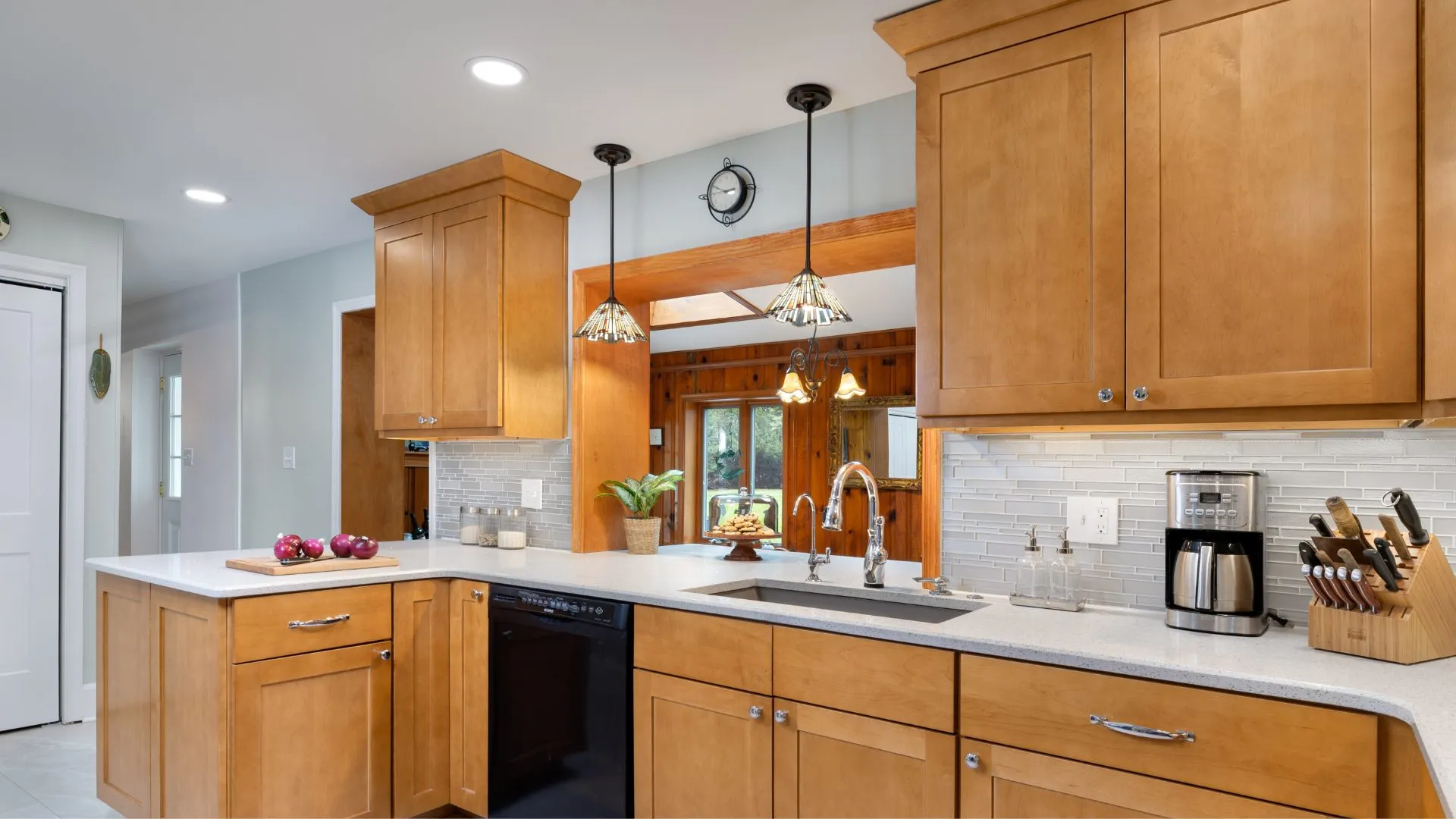
A kitchen remodel remains one of the most substantial investments a homeowner can make. Because cabinetry consistently accounts for 30 percent to 40 percent of total renovation costs, choosing how to update your storage is the single most critical financial decision of the project. Homeowners typically face two primary paths: cabinet refacing or total cabinet replacement. Both methods dramatically alter the appearance of your kitchen, but they require vastly different financial allocations, timelines, and levels of disruption.
Understanding the structural, financial, and logistical differences between these two options ensures your budget delivers maximum aesthetic and functional return.
Understanding the Structural Differences
Before allocating funds, you must evaluate what each process entails at a construction level.
What Is Cabinet Refacing?
Cabinet refacing is a cosmetic and surface overhaul built on the premise that your existing cabinet boxes remain sound. The process involves:
-
Removing and discarding all existing cabinet doors, drawer fronts, and hardware.
-
Inspecting and reinforcing the existing cabinet boxes or carcasses.
-
Applying a fresh layer of matching wood veneer or rigid thermal foil (RTF) across the exposed exterior surfaces, including face frames and side panels.
-
Installing brand-new doors, drawer faces, hinges, and pulls.
-
Replacing drawer boxes or upgrading interior glides to soft-close mechanisms if desired.
Refacing keeps the structural footprint of the kitchen intact while presenting an entirely new exterior aesthetic.
What Is Cabinet Replacement?
Cabinet replacement is a full-scale teardown. Contractors completely demolish and remove the existing cabinetry down to the drywall. The process involves:
-
Tearing out countertops, sinks, plumbing connections, and backsplashes to access the cabinetry.
-
Detaching and discarding all base and wall-mounted cabinet boxes.
-
Repairing underlying drywall, addressing framing flaws, and leveling uneven floors or walls.
-
Installing entirely new, pre-assembled or custom-built cabinet boxes anchored to the wall studs.
-
Mounting new face frames, doors, interior organizational inserts, and trim moldings.
Replacement allows you to alter the kitchen floor plan, expand workspace, or correct inefficient traffic patterns.
Cost Comparison: The Financial Breakdown
Budgeting accurately requires looking beyond rough estimates to understand labor, material tiers, and incidental expenses.
Cabinet Refacing Cost Tiers
Refacing costs significantly less than a full rebuild primarily because it eliminates rough framing, structural drywall repair, and extensive plumbing or electrical relocation.
-
Laminate or Rigid Thermal Foil (RTF): Costs typically range from 4,000 to 9,000 dollars for a standard 10-by-10-foot kitchen. This option provides a durable, easy-to-clean surface ideal for tight budgets.
-
Real Wood Veneer: Using natural wood veneers such as oak, maple, cherry, or alder generally costs between 8,000 and 14,000 dollars. This gives the tactile feel and visual grain of brand-new solid wood cabinetry.
-
Labor Allocation: Labor represents roughly 40 percent to 50 percent of the refacing invoice, as cutting and bonding veneer onto existing face frames demands precise carpentry skills.
Cabinet Replacement Cost Tiers
Replacing cabinetry introduces a much broader price spectrum dictated by construction quality and customization.
-
Stock Cabinets: Mass-produced in standard three-inch increments using particleboard or medium-density fiberboard (MDF). Total costs, including basic professional installation, range from 6,000 to 12,000 dollars for a standard kitchen.
-
Semi-Custom Cabinets: Built with higher-grade plywood boxes, solid wood frames, and a wider variety of finishes and door styles. Standard kitchens range from 13,000 to 25,000 dollars.
-
Custom Cabinets: Hand-crafted to the exact sixteenth-inch dimensions of your room, featuring premium domestic hardwoods, bespoke pull-outs, and dovetailed joinery. Costs frequently run from 25,000 to 50,000 dollars or higher.
-
The Compounding Expense Factor: Demolishing cabinets almost always damages the countertop and backsplash. Replacing your cabinets forces you to budget an additional 2,500 to 7,000 dollars for new stone surfaces, plumbing fixtures, and tile work, even if your existing counters were in decent condition.
Deciding Factors: When to Reface vs. When to Replace
Price alone should not dictate your choice. A flawed layout or rotting structural box renders refacing an expensive waste of money. Use the following criteria to audit your kitchen.
When Cabinet Refacing Makes Sense
-
The Layout Works: Your stove, sink, refrigerator, and prep zones form an efficient work triangle that meets your cooking habits.
-
The Carcasses Are Structurally Sound: The plywood or furniture-board sides, bottoms, and backs show no signs of water damage, sagging, rot, or mold.
-
You Want to Preserve Existing Countertops: If you recently invested in high-end granite, marble, or quartz counters, refacing allows you to update the room without disturbing or cracking the stone.
-
Time and Cleanliness Are Critical: Refacing typically takes between three to five days of on-site labor. The kitchen remains largely usable outside working hours, eliminating the need to factor eating-out expenses into the project budget.
When Full Cabinet Replacement Is Essential
-
The Floor Plan Is Broken: You have awkward corners, dead zones, insufficient clearance around an island, or appliances placed too close together.
-
Structural Failure: The cabinet boxes are pulling away from the walls, bottoms are warped from sink leaks, or the internal particleboard has swollen and degraded.
-
Storage Deficits: Modern cabinets offer functional advantages that older boxes cannot easily replicate, such as extra-deep drawers for pots, tall pantry pullouts, and optimized vertical space using 42-inch uppers instead of 30-inch units.
-
Complete Home Renovation: If you are removing load-bearing walls, rerouting gas lines, or pouring new subflooring, the kitchen must be cleared completely.
Hidden Costs to Factor Into Your Renovation Budget
Homeowners frequently blow past their budgets because they fail to account for the auxiliary expenses that accompany kitchen construction.
-
Appliance Compatibility: Older cabinets often housed non-standard appliance sizes. Installing new modern dishwashers, double ovens, or commercial-depth refrigerators may require modifying adjacent cabinetry.
-
Permitting and Code Compliance: Full replacement projects involving relocated electrical outlets or altered plumbing lines require municipal permits, which can add 400 to 1,500 dollars to the final cost.
-
Disposal and Haul-Away Fees: Demolishing a kitchen yields heavy debris. Dumpster rentals and dump fees generally cost between 300 and 800 dollars depending on local disposal regulations.
-
Incidental Drywall and Subfloor Patching: When old cabinets come off the wall, you will inevitably find unpainted drywall, missed plaster patches, or missing flooring runs where old kick-plates once sat.
Return on Investment and Long-Term Value
Both refacing and replacement offer solid financial recovery, but their value depends heavily on neighborhood standards.
Refacing provides an immediate, efficient boost to home equity if you plan to sell within two to three years. Buyers perceive a fresh, clean, contemporary aesthetic, while you recoup up to 70 percent to 80 percent of your expenditures because of the lower upfront cost.
Full replacement yields a higher absolute return in mid-to-high-end housing markets. Discerning buyers notice when high-end appliances sit inside refaced boxes with dated interior shelving. In luxury homes, a complete custom remodel aligns better with buyer expectations and supports a higher appraisal ceiling, even if the initial percentage of cost recouped sits closer to 55 percent to 65 percent.
Frequently Asked Questions
Can you reface cabinets that have previously been painted multiple times?
Yes, provided the paint adheres tightly and the underlying wood or substrate remains flat and structurally sound. The contractor will strip loose flakes, thoroughly sand the surface to ensure proper mechanical adhesion, and level uneven areas before bonding new veneer panels.
Will refacing cabinets fix doors that hang crookedly or fail to close properly?
Refacing replaces all hinges with modern, multi-axis adjustable hardware, which corrects door alignment issues. However, if the crooked hanging stems from a cabinet box that has twisted, racked, or pulled away from out-of-plumb walls, the structural box must be squared and re-anchored before refacing can proceed.
Is it possible to reface only a portion of the kitchen while replacing other sections?
Yes. A common hybrid strategy involves keeping the perimeter wall cabinets and refacing them, while demolishing a cramped existing island to install an entirely new, expanded island with modern drawer banks. Skilled cabinet refacers can match the veneer and door profiles across both old and new sections seamlessly.
How does cabinet refacing affect indoor air quality during and after installation?
Cabinet refacing uses contact adhesives and solvent-based or water-based glues to bond veneers to face frames, which off-gas volatile organic compounds during application and curing. Working with contractors who use low-VOC adhesives and ensuring cross-ventilation during the three to five days of installation minimizes odors and chemical exposure.
Can frameless European-style cabinets be refaced using standard techniques?
Frameless cabinets lack a front face frame, meaning the door attaches directly to the interior box edge. They can still be refaced, but the process involves applying edge-banding tape along the exposed forward edges of the box and hanging new full-overlay doors, rather than applying wide veneer sheets.
Does cabinet refacing allow you to change the height of your upper cabinets?
Refacing cannot alter the dimensions of your existing boxes. If you have 30-inch upper cabinets and want ceiling-height 42-inch storage, you must either replace those specific boxes entirely or build stacked add-on boxes directly above the existing units before applying matching veneer across the entire structure.
Comments are closed.