

Key Takeaways
Renting forklifts can lead to major cost savings. By cutting out expenses like maintenance, insurance, and depreciation, businesses can allocate their budgets more strategically.
This option also gives organizations the flexibility to scale their operations based on seasonal demands, thus avoiding the weight of excess inventory or unused equipment.
Professionals must understand lifting capacities when selecting a forklift; picking the wrong model may lead to unexpected financial losses and safety hazards.
The right forklift should also be environmentally compatible. Factors such as surface type, space constraints, and preferred power sources should be considered for optimal performance.
Additionally, rentals boost construction efficiency. They facilitate timely material handling, enabling contractors to tailor their approach to specific job demands, ultimately cutting down on downtime.
In the warehousing context, rentals help optimize both space and workflow, allowing managers to swiftly adapt to market fluctuations while keeping capital expenditures minimal.
Clients should pay close attention to rental agreements. Key terms like costs, liability, and maintenance responsibilities need a thorough review to prevent potential misunderstandings in the future.
Maximizing Efficiency: Why Forklift Rentals Outperform Purchases
The Financial Upside of Forklift Rentals
Many professionals face the ongoing challenge of budget limitations. Forklift rentals offer a savvy alternative that can yield considerable cost reductions. Purchasing a forklift typically requires a hefty cash investment upfront. On the flip side, rental agreements provide much-needed flexibility, allowing organizations to allocate funds more wisely.
Lower overhead costs are a common experience for clients. By choosing to rent a forklift, companies effectively sidestep various expenses related to maintenance, insurance, and depreciation. These costs can accumulate quickly, so it’s essential to be vigilant. Ultimately, rental payments tend to be more predictable and manageable compared to the unpredictable expenses that come with ownership.
Here are some noteworthy advantages:
- No long-term financial commitments
- Reduction of maintenance expenses
- Tax benefits associated with operational costs
It’s surprising how many businesses overlook these financial benefits. Strategic rental approaches, combined with improved operational efficiency, can lead to substantial long-term savings.
Flexibility for Seasonal Demand and Project Variations
In today’s fast-paced business environment, being adaptable is crucial. Forklift rentals offer unmatched flexibility. Companies often experience fluctuating demands, especially seasonally. With rentals, they can scale operations without dealing with surplus inventory or underused equipment. This adaptability becomes especially important during peak periods when demand may rise unexpectedly.
Using rental forklifts allows businesses access to the latest equipment featuring modern technology. They can adjust fleet sizes as necessary, catering to the specific needs of various projects.
The implications for workflow are significant:
- A broad selection of models to choose from
- Short-term rental agreements that align with project timelines
- The option to rent extra forklifts during peak demand periods
This flexibility simplifies adjustments based on changing project requirements, eliminating the hassles associated with maintaining idle equipment.
Choosing the Right Forklift: Essential Considerations
Understanding Lifting Capacities for Your Unique Needs
Not every forklift serves the same purpose. Distinguishing between various models can be daunting. Understanding the lifting capacities is vital for meeting unique project demands. Each industry has its specific requirements that call for tailored capabilities.
The lifting capacity, typically measured in tons, indicates how much weight a forklift can handle safely. This is a crucial detail that clients must keep in mind. Opting for a forklift with insufficient capacity can have serious financial repercussions, as well as safety concerns.
Key factors to consider include:
- Maximum lifting height
- Load center distances
- Operating conditions (whether indoors or outdoors)
Potential renters gain an advantage by estimating their loads. Conducting a thorough inventory assessment can help clarify the necessary specs, ensuring the right equipment is on-site when it’s needed.
What Makes a Forklift Compatible with Your Environment?
Not all forklifts are suitable for every environment. That’s why environmental compatibility matters. Experts stress the importance of selecting the right equipment for specific operational settings. Key considerations include surface type, space limitations, and terrain. For instance, scissor lifts or rough-terrain forklifts are perfect for outdoor, irregular surfaces, while electric models are better suited for quieter indoor operations.
Compatibility hinges on several essential elements:
- Maneuverability in confined spaces
- Preferred power sources (whether electric, diesel, or propane)
- Safety features tailored to specific operational risks
Every project features its own unique needs, so it’s essential for companies to deliberate on the finer points of their environment to achieve optimal performance.
Real-World Applications: Forklift Rentals in Various Industries
Construction Projects: Streamlining Material Movement
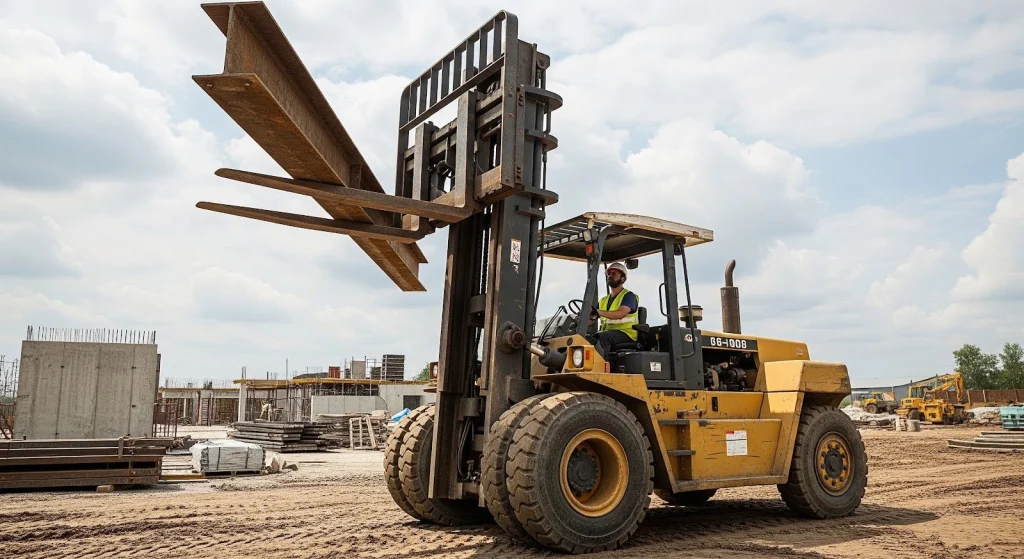
Time equals money in construction. Navigating materials effectively is essential. Rental forklifts shine in this domain, facilitating rapid material handling. The range of models available aids in the efficient transportation of heavy items like steel beams, concrete blocks, or pallets of tiles.
Experts note that having readily available, suitable equipment greatly improves productivity. Contractors can select forklifts tailored to specific job requirements, whether those entail compact models for tight spaces or larger units designed for heavy loads.
These factors significantly enhance operations:
- Minimized downtime through flexible rental agreements
- Adaptability to varying project requirements as they emerge
- Access to modern, high-performance equipment
In the end, construction crews enjoy smoother operations by leveraging rentals within their logistics strategies.
Warehouse Operations: Enhancing Productivity Through Rentals
Rentals also excel in the warehousing sector. Forklifts play a crucial role in optimizing space and improving workflow. These environments often grapple with challenges involving high volumes of inventory turnover and the need for swift order fulfillment. Forklift rentals offer solutions that perfectly align with those demands.
Dynamic warehouse conditions benefit from:
- Availability of various forklift models suited for different tasks
- Lower capital expenditure tied to immediate operational needs
- Opportunities to experiment with different equipment without long-term commitments
Warehouse managers gain the agility to adapt quickly to changing market conditions and demands. Having the appropriate vehicle at their disposal allows them to mitigate labor inefficiencies.
The Rental Process: What Clients Can Expect
Working through the Rental Agreement: Key Terms to Know
Grasping the rental agreement is essential for a positive experience. Many clients may overlook important contractual details. Familiarity with terms such as duration, costs, and maintenance responsibilities is crucial. Professionals recommend taking the time to carefully review these aspects prior to signing the contract.
Important terms include:
- Daily, weekly, and monthly rental rates
- Liability and insurance stipulations
- Service and maintenance provisions
Businesses should advocate for clarity in these matters. A well-crafted agreement can prevent headaches later on, offering peace of mind for the duration of the rental.
Delivery and Setup: Ensuring a Smooth Operational Start
Once the agreement is finalized, the next focus is logistics. Delivery and setup constitute critical steps that should not be overlooked. Synchronizing delivery schedules makes sure operators are trained and equipped to use the machinery without delays. Organizing logistics may seem daunting, but it’s really just about keeping things orderly.
A thorough initial inspection can provide valuable insights. Getting a grasp of operational capabilities ahead of time prevents dangers and surprises during the project. Key elements to consider include:
- Arrival and setup timelines that align with project demands
- Operator training focused on the unique features of the equipment
- Post-rental return procedures and expectations
With open communication with the rental provider, projects can commence smoothly, laying the groundwork for success.
FAQ
What industries benefit the most from forklift rentals?
While construction and warehousing are the most prominent sectors, several industries like manufacturing, retail, and logistics capture significant advantages from forklift rentals. Each sector utilizes forklifts in ways that make rental solutions versatile across a wide array of applications.
Are there different types of forklifts available for rent?
Indeed, the rental market offers a diverse range of forklifts tailored to specific requirements. This includes electric forklifts ideal for indoor settings, rough-terrain models for outdoor applications, and narrow aisle forklifts suited for tight warehouse layouts. Such diversity allows businesses to pinpoint the right equipment for their needs.
How can businesses determine the right forklift type for their operations?
A thorough assessment of the operational environment is essential. Companies should evaluate factors such as weight capacity, lift height, and spatial constraints. Having a clear understanding of the specific tasks the forklift must handle will guide businesses as they select the most appropriate type for their operations.
What training is required for employees operating rental forklifts?
Employers need to prioritize operator training for safety and efficiency. Rental companies usually provide insights on equipment features; however, it’s essential for businesses to ensure their operators are certified and well-acquainted with the specific model in use to meet required safety standards.
How does insurance work for rented forklifts?
Typically, insurance is included in the rental agreement, though specifics can vary among providers. Clients should inquire about liability coverage and be mindful of any additional insurance options that may be necessary given their operational context and associated risks.
Can businesses negotiate rental terms with providers?
Absolutely, negotiation on rental terms is often possible. Clients shouldn’t hesitate to discuss pricing, maintenance responsibilities, and rental duration to customize the agreement according to their requirements. Open communication with rental providers often leads to arrangements that benefit both parties.
What happens if equipment is damaged during the rental period?
Rental agreements usually encompass terms regarding damage liability. Typically, clients are responsible for any damages that occur while the equipment is in their possession. Therefore, understanding these clauses along with considering comprehensive insurance options is crucial for adequate coverage.
How can clients return rental forklifts efficiently?
The return of rentals should follow the process detailed in the rental agreement. Clients need to prepare logistics for the pickup, ensure the equipment’s good condition, and confirm the return procedure with the rental company to ensure a seamless transition.
Useful Resources
- Occupational Safety and Health Administration (OSHA)– Insight on forklift safety standards and training requirements.
- National Federation of Independent Business (NFIB)– Resources on financial management and budgeting for small businesses.
- National Safety Council (NSC)– Guidelines and best practices for safety in workplace settings with heavy machinery.
- International Forklift Association– Industry insights along with educational material regarding forklift usage and rental practices.
- American Psychological Association (APA)– Research assessing the impact of workplace safety on mental health and productivity among employees.
- International Council of Shopping Centers (ICSC)– Information regarding warehousing and logistics best practices within retail environments.
- Institute of Industrial and Systems Engineers (IISE)– Resources focused on optimizing operational efficiency and material handling processes.
- Industrial Cooperative Council (ICC)– Dedicated to improving equipment safety standards and regulatory compliance.